

Discover the visionary architects and interior designers behind Rosewood São Paulo, Capella Ubud, The Upper House, Aman Kyoto, The Silo and other extraordinary luxury hotels.
The world’s greatest luxury hotels are remembered for far more than Michelin-starred restaurants, spectacular spas or impeccable service. Long after check-out, what lingers is how a place made you feel.
Behind every unforgettable hotel is a visionary designer who has transformed architecture into emotion, creating spaces that tell stories, celebrate local culture and leave guests wanting to return time and again.
As luxury hospitality evolves, design has become one of the industry’s most powerful differentiators. Today’s affluent traveller isn’t searching for another beautiful room. They want authenticity, craftsmanship, artistry and a genuine sense of place.
These are the designers shaping some of the world’s most extraordinary luxury hotels.
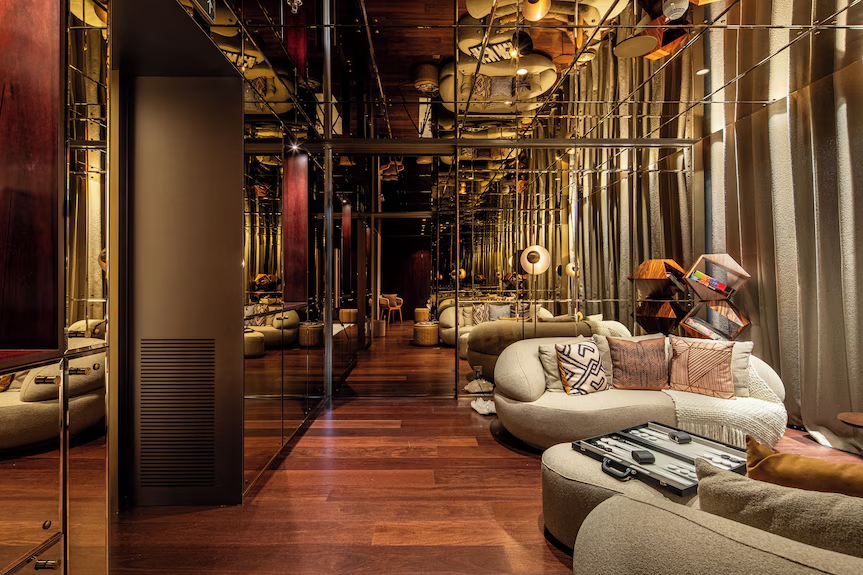
Philippe Starck: The Original Hotel Disruptor
Long before “lifestyle hotels” became fashionable, Philippe Starck was challenging every convention of luxury hospitality.
His collaborations span some of the world’s best-known brands, including La Réserve, SLS, Mondrian and Mama Shelter, yet every project carries Starck’s unmistakable signature, playful, theatrical and entirely unexpected.
Among his greatest achievements is Rosewood São Paulo, arguably one of the most immersive luxury hotels ever created. Rather than simply decorating a hotel, Starck celebrated Brazil itself. Every floor showcases a different Brazilian artist, while indigenous materials, handcrafted furnishings and contemporary art combine to create a living cultural experience.
Guests don’t simply stay at Rosewood São Paulo, they become immersed in Brazilian creativity. For Starck, a hotel should never feel manufactured. It should surprise, inspire and constantly reveal something new.
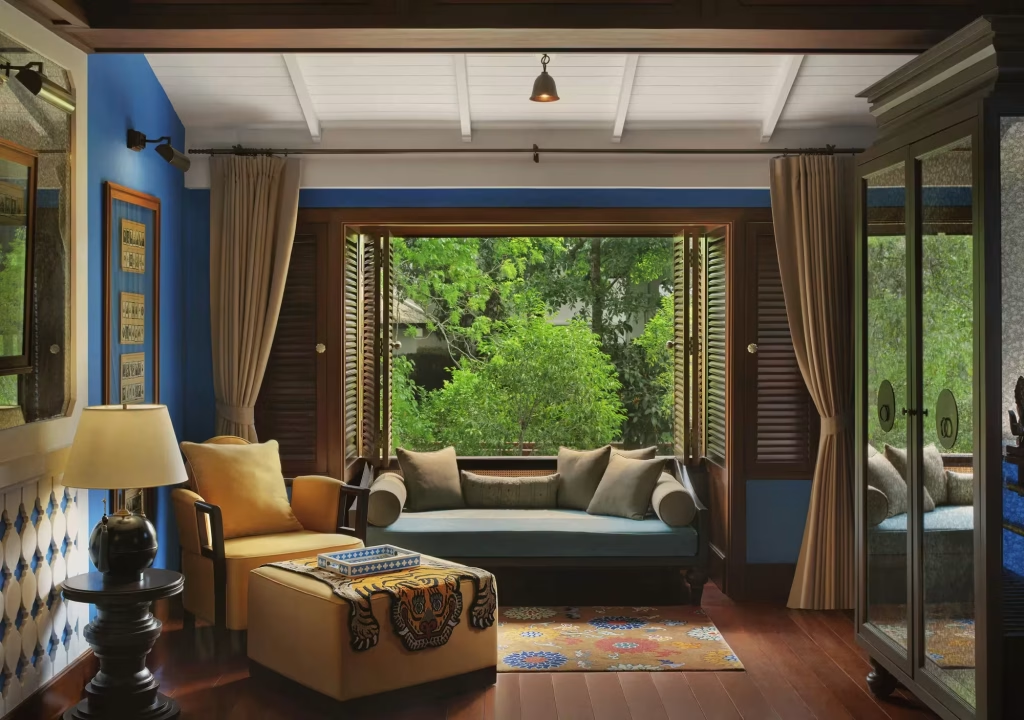
Bill Bensley: Asia’s Greatest Storyteller
Few designers have had a greater influence on luxury hospitality across Asia than Bill Bensley.
Having completed more than 200 hospitality projects across over 30 countries, Bensley has become synonymous with bold imagination and extraordinary storytelling.
His portfolio includes Capella Ubud, Capella Hanoi, Rosewood Luang Prabang, Four Seasons Koh Samui, The Siam Bangkok, InterContinental Danang Sun Peninsula Resort, JW Marriott Phu Quoc Emerald Bay and countless Four Seasons, Rosewood and luxury independent resorts throughout Asia.
His work is instantly recognisable. Rich layers of antiques, sculptures, rare artefacts, dramatic colours and handcrafted details fill every corner. Every object appears to have a history, every room tells a story.
Capella Ubud remains one of his masterpieces. Hidden among Bali’s rainforest, the tented retreat imagines the lives of nineteenth-century explorers arriving on the island. Villas are themed around professions including photographers, cartographers and naturalists, each filled with carefully curated objects that bring those fictional stories to life.
Bensley has often said he dislikes minimalism. His philosophy is simple: if you’re going to create something memorable, don’t hold back.

Clint Nagata: Designing Hotels That Belong
For more than two decades, Clint Nagata, founder and creative partner of Singapore-based Blink Design Group, has quietly shaped many of Asia’s finest luxury hotels.
His impressive portfolio includes Capella Bangkok, Aman Kyoto, Six Senses Kyoto, Regent Phu Quoc, Four Seasons resorts, Ritz-Carlton hotels and numerous landmark properties across Japan, China, Thailand, Vietnam and Indonesia.
Nagata’s philosophy is refreshingly different. Rather than creating recognisable interiors, he believes every hotel should belong completely to its destination.
His team spends months studying local architecture, traditions, craftsmanship and landscapes before a single design is developed. The result is hotels that feel deeply authentic rather than internationally interchangeable.
Capella Bangkok perfectly illustrates this philosophy. Overlooking the Chao Phraya River, the hotel combines refined contemporary design with subtle Thai influences, creating an atmosphere of understated elegance that consistently ranks among the world’s finest luxury hotels. His work demonstrates that true luxury often whispers rather than shouts.

André Fu: Master of Quiet Luxury
If Bill Bensley embraces theatrical storytelling, André Fu has become the global ambassador for understated luxury.
The Hong Kong designer has transformed hospitality through projects including The Upper House Hong Kong, The St. Regis Hong Kong, Villa La Coste in Provence and The Emory in London. His interiors are elegant without ever feeling ostentatious. Soft natural palettes, sculptural furniture, exquisite lighting and generous proportions create spaces that immediately evoke a sense of calm.
Fu often speaks about designing emotional journeys rather than rooms, believing the finest luxury hotels should slow guests down and reconnect them with their surroundings. His influence has helped define the aesthetic now known worldwide as quiet luxury.

Kengo Kuma: Blurring Nature and Architecture
Japanese architect Kengo Kuma has become one of hospitality’s most respected designers by creating buildings that seem to disappear into their surroundings.
His projects—including Capella Kyoto, Amanemu, The Tokyo Edition Toranomon and numerous luxury resorts across Japan—celebrate timber, stone, paper, water and natural light. Rather than dominating the landscape, Kuma’s hotels exist in harmony with it.
Capella Kyoto is perhaps his most anticipated hospitality project to date. Drawing inspiration from Kyoto’s historic machiya townhouses, the hotel combines centuries-old Japanese craftsmanship with contemporary luxury, creating a deeply peaceful sanctuary in one of Japan’s most culturally significant cities.
Kuma believes architecture should create a dialogue between people and nature—a philosophy increasingly embraced by luxury travellers seeking meaningful experiences over spectacle.

Joyce Wang: London’s New Luxury Visionary
Few designers have risen as quickly within luxury hospitality as Joyce Wang.
Based between London and Hong Kong, Wang has become renowned for creating sophisticated interiors that seamlessly blend heritage architecture with contemporary design.
Her hospitality portfolio includes The Landmark Mandarin Oriental Hong Kong, The Berkeley Bar & Terrace in London, public spaces within Rosewood Hong Kong, and projects for Mandarin Oriental, Four Seasons and several ultra-luxury private clubs.
Wang’s work is distinguished by meticulous craftsmanship, sculptural furniture, bespoke lighting and carefully layered materials that create spaces feeling both glamorous and intimate.
Rather than overwhelming guests with extravagance, her interiors invite discovery through beautifully considered details.
Her influence is increasingly visible across both London’s evolving luxury hotel scene and Asia’s next generation of landmark properties.

Liz Biden: Celebrating African Luxury
In South Africa, Liz Biden, founder and owner of The Royal Portfolio, has redefined luxury through one of the world’s most distinctive hotel collections.
Properties including The Silo Hotel in Cape Town, Royal Malewane, Birkenhead House and La Residence showcase vibrant African art, antiques, handcrafted furniture and extraordinary attention to detail.
Rather than importing European luxury, Biden celebrates African creativity. Each property is filled with commissioned artworks, locally crafted furnishings and bold interiors reflecting the culture, wildlife and landscapes surrounding each destination.
The Silo Hotel, rising above Cape Town’s Zeitz Museum of Contemporary Art Africa, has become an international icon, while La Residence in the Cape Winelands remains one of the continent’s most romantic retreats.
Biden’s work proves that luxury becomes infinitely more memorable when it reflects its destination.

The Future of Luxury Hotel Design
Although each designer approaches hospitality differently, they share one defining belief. The greatest luxury hotels are never built around trends. Instead, they are created through storytelling, craftsmanship and emotional connection.
Whether it is Philippe Starck immersing guests in Brazilian culture, Bill Bensley transporting travellers into fictional worlds, André Fu redefining quiet luxury, Clint Nagata capturing the spirit of Asia, Kengo Kuma dissolving the boundaries between architecture and nature, Joyce Wang layering glamour with intimacy or Liz Biden celebrating contemporary Africa, each has transformed hotels into destinations worth travelling for.
In an age where travellers can fly almost anywhere in the world, that may be luxury hospitality’s greatest achievement. The finest hotels are no longer simply places to stay. They are works of art.


1 Comment
Pingback: Bvlgari Resort Bodrum to Debut in 2027. A New Gem from the World’s Chicest Luxury Hotel Brand | Renae's World