

From the understated beauty of Paros and the glamour of Mykonos to emerging islands, exceptional food and a new generation of luxury hotels, this is the Renae’s World guide to experiencing Greece.
Few countries have the ability to continually reinvent themselves while retaining such a powerful sense of identity as Greece.
I have travelled throughout Greece for more than 20 years, returning repeatedly to its islands, coastal villages and extraordinary blue waters. On every visit, I discover another layer: a family-run taverna serving fish caught that morning, an emerging island still largely untouched by international tourism, or a new luxury hotel quietly redefining Mediterranean hospitality.
The Greece I first visited more than two decades ago was driven predominantly by traditional hotels, independent restaurants and simple island experiences.

Today, it has become one of Europe’s fastest-growing luxury travel destinations, attracting major international hotel groups, sophisticated chefs, wellness brands and affluent travellers from around the world.
Yet Greece’s greatest luxury remains unchanged. It is found in its warmth, food, landscape, history and an innate ability to encourage travellers to slow down.
This luxury Greece travel guide brings together the best Renae’s World stories about where to stay, which Greek islands to visit and how the country’s hospitality industry is evolving.

Why Greece Remains One of Europe’s Best Luxury Destinations
There are more than 6,000 Greek islands and islets, although only around 200 are inhabited. Each has its own atmosphere, architecture, food and rhythm.
Santorini offers volcanic drama and spectacular sunsets. Mykonos combines whitewashed beauty with beach clubs, fine dining and international glamour. Crete delivers scale, history, exceptional produce and an increasingly sophisticated hotel scene. Smaller islands such as Sifnos, Folegandros, Milos and Paros provide a more intimate relationship with Greek culture.
Our guide to the best islands in Greece for a European summer is an excellent starting point for deciding which destination best suits your travel style.
Greece also lends itself beautifully to island-hopping. A trip can combine the energy and restaurants of Mykonos with the softer, more grounded atmosphere of Paros, or the sculptural landscapes and extraordinary beaches of Milos.
The most important decision is no longer whether to visit Greece, but which version of Greece you want to experience.


Paros: The Greek Island Redefining Understated Luxury
Of all the Greek islands I have visited, Paros is the one that most recently captured my heart.
It has the polished boutique hotels, sophisticated restaurants and beautiful beach clubs expected by experienced luxury travellers, but it has not completely surrendered its identity to tourism.
Fishermen still unload the morning’s catch around its harbours. Family-run tavernas remain central to island life. Whitewashed villages feel lived in rather than preserved exclusively for visitors.
In Paros: The Greek Island That Made Me Fall in Love with Greece All Over Again, I explore why the island offers something increasingly rare in European luxury travel: sophistication without losing its soul.

Naoussa is the island’s magnetic centre. During the day, its narrow pedestrian lanes reveal independent jewellery designers, linen boutiques, artisan ceramics and small cafés. By evening, the harbour fills with music, cocktails and beautifully dressed travellers moving between waterfront restaurants and softly lit bars.
The quality of food throughout Paros is exceptional. Fish often arrives directly from the Aegean, tomatoes taste intensely of summer, herbs are picked fresh, and local olive oil is treated with the same respect as fine wine.
Luxury hotels have arrived too, including Parilio, Cosme, Summer Senses, Avant Mar, Mythic and Acron Villas. Yet much of the island retains a relaxed pace that feels worlds away from the intensity of Mykonos during peak season.
Despite recent reports suggesting the island’s popularity has peaked, my view is very different. In Everyone Is Saying Paros Is Over. I Think They’re Looking at the Wrong Island, I examine why rankings do not always reflect what experienced travellers actually value.
Paros may no longer be the industry’s secret discovery, but it remains one of the most balanced and compelling Greek islands.

Parilio: A Different Kind of Greek Island Hotel
Parilio represents the quieter, more design-focused side of Greek luxury.
Rather than competing through excess, the hotel uses light, space, natural textures and a restrained Cycladic palette to create an environment that immediately slows the pace of a stay. Sculptural forms, pale stone and neutral interiors allow the surrounding landscape to take precedence.
In my full review, Why Luxury Travellers Are Choosing Paros Over Mykonos—and Parilio Is Leading the Way, I explore how Parilio reflects a broader shift within high-end Mediterranean hospitality.

Luxury travellers are increasingly moving away from hotels built solely around spectacle. They want privacy, strong design, local food, emotional warmth and a sense that the hotel belongs in its environment.
Parilio delivers that softer interpretation of luxury while remaining close enough to Naoussa for guests to experience the island’s restaurants, shopping and evening energy.

Is Paros Better Than Mykonos?
Paros and Mykonos are often compared, but they provide very different holidays.
Mykonos offers international restaurants, major beach clubs, designer shopping, luxury villas and one of Europe’s most recognisable summer social scenes. It is ideal for travellers who want energy, glamour and a sense of occasion.
Paros is better suited to travellers looking for exceptional food, boutique hotels, picturesque villages and a slower pace without sacrificing style.
For many luxury travellers, the best answer may be to experience both. Ferries between the islands make it possible to combine Mykonos’s exuberance with the relative calm of Paros.

How to Experience Mykonos in Five-Star Style
Mykonos has changed dramatically since I first visited more than 20 years ago. Prices have increased, international luxury brands have arrived and the beach-club culture has become a global phenomenon.
Yet the island retains a particular kind of magic.
Mykonos Town remains extraordinarily beautiful early in the morning, before the streets fill with shoppers and cruise passengers. Its whitewashed lanes, blue doors, flowering bougainvillea and tiny churches create the visual identity travellers associate with the Cyclades.

The island is also home to some of Greece’s best-known restaurants, beach clubs and luxury hotels. Our guide to experiencing Mykonos in five-star style covers the hotels, beaches and experiences that make the island such an enduring destination.
The key to enjoying Mykonos is planning carefully. Travel outside the busiest weeks if possible, reserve restaurants and beach clubs in advance and choose your hotel according to whether you want nightlife, beach access or privacy.
Mykonos is not the Greek island for avoiding attention. It is where luxury is social, glamorous and frequently theatrical—and that is precisely why so many people return.

The Best Under-the-Radar Greek Islands
As Mykonos, Santorini and Paros attract increasing attention, experienced travellers are searching for smaller islands offering a stronger sense of discovery.
Our guide to the under-the-radar Greek islands worth escaping to explores destinations that remain relatively removed from large-scale international tourism.
These quieter islands appeal to travellers who value local food, uncrowded beaches, traditional architecture and small independent hotels over high-profile brands.

Sifnos is increasingly celebrated for its food and elegant simplicity. Folegandros has dramatic cliffs and a beautifully preserved hilltop town. Serifos feels rugged and relatively raw, while Syros combines neoclassical architecture with a more cosmopolitan year-round community.
Milos has become increasingly fashionable because of its unusual volcanic beaches, clear water and striking coastal formations. Although its profile is rising rapidly, it still offers places where luxury is defined by landscape and access rather than polished infrastructure.
Smaller islands can require more planning, especially around ferries, transfers and seasonal hotel openings. However, that slight inconvenience is often what protects them from excessive development.

Greece’s Five-Star Hotel Boom
Greece is experiencing one of the most significant luxury hotel expansions in Europe.
Major international groups are opening resorts across the mainland and islands, while Greek hospitality companies are creating increasingly sophisticated boutique hotels rooted in local architecture and culture.
In The Rise of Five-Star Luxury Accommodation in Greece, I examine the opportunities and tensions created by this rapid growth.
New investment brings international marketing, infrastructure, employment and travellers willing to spend significantly on food, wellness and private experiences. It also places pressure on the family-run hotels that have defined Greek tourism for generations.
These smaller properties face rising operational costs, staffing pressures and guests whose expectations are increasingly influenced by international hotel brands.
The challenge for Greece is to grow without erasing the independent businesses and personal hospitality that made the country so desirable in the first place.
The most interesting Greek hotels are often those that combine both worlds: international standards of comfort and service with family ownership, local food, regional design and a strong connection to place.

Mandarin Oriental Costa Navarino and Mainland Luxury
The development of luxury hospitality is not restricted to the Greek islands.
Athens, the Peloponnese and coastal mainland destinations are attracting significant international investment, turning Greece into a more compelling year-round destination.
The arrival of Mandarin Oriental’s first resort in Greece was an important milestone. Located at Costa Navarino in the southwestern Peloponnese, the resort is integrated into the Messinian landscape through earth-sheltered villas, planted roofs and expansive views across Navarino Bay.
Its suites and private-pool villas reflect a growing demand for space, privacy and multigenerational travel. The resort also brings together destination dining, private culinary experiences, wellness and access to one of mainland Greece’s most beautiful coastal regions.
Costa Navarino demonstrates that a luxurious Greek holiday no longer needs to focus exclusively on the Cycladic islands.
Mainland Greece can combine beaches, archaeological sites, food, wine, wellness and luxury hotels without the ferry schedules and seasonal congestion associated with island-hopping.

The Greek Hoteliers Protecting a Sense of Place
Greece’s hospitality story is not only about buildings and international brands. It is also about the people determining how the country evolves.
In my Where2FromHere conversation with Greek hotelier Kalia Konstantinidou, we explore the thinking behind Empiria Group, one of Greece’s most influential family-owned luxury hospitality companies.
Its portfolio includes properties across Santorini and Paros, including Parilio and Cosme. The group’s approach shows how contemporary luxury can coexist with a strong Greek identity.
This matters because the future of Greek tourism will depend on more than creating expensive hotels. It will depend on whether those properties preserve local employment, culture, architecture, food systems and community relationships.
The best luxury hotels do not separate guests from their destination. They make the connection richer.

Greek Food: One of the Country’s Greatest Luxuries
Greek food is often described as simple, but that simplicity depends on extraordinary ingredients.
Perfectly ripe tomatoes, local olive oil, wild herbs, freshly caught fish, grilled octopus, sharp cheeses and stone fruit require very little intervention. The produce carries the experience.
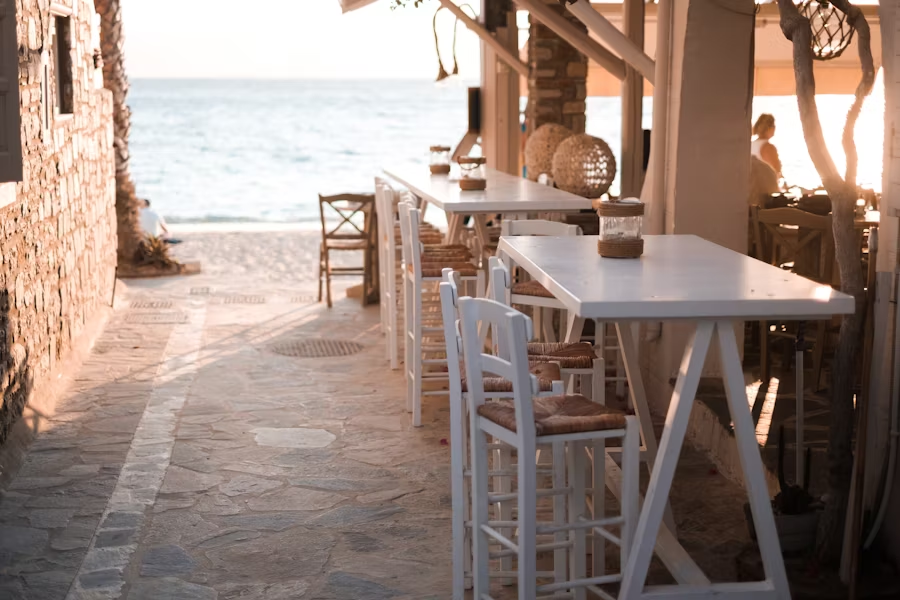
On the islands, dining can range from a family-run taverna with tables in the sand to an elegant hotel restaurant using contemporary techniques. Some of my most memorable meals in Greece have not been the most formal. They have been long lunches where the fish was selected that morning, the wine was local and nobody appeared interested in hurrying the table.
Paros has developed a particularly impressive dining scene, with restaurants around Naoussa, Aliki and the southern coastline providing very different expressions of the island.
The best way to eat in Greece is to mix high-end dining with traditional tavernas, bakeries, produce markets and family-run restaurants. Luxury should expand your access to local culture rather than isolate you from it.

Beaches, Freedom and the More Bohemian Side of Greece
Greece’s island culture has always included a more relaxed and free-spirited relationship with beach life.
Red Beach in Santorini, Banana Beach in Skiathos and Paradise Beach in Mykonos all feature in our guide to the world’s best nudist and clothing-optional beaches.
Some are glamorous and social, while others offer seclusion and an opportunity to reconnect with nature. They reveal another side of Greek island travel—one built around freedom, warmth and the uncomplicated pleasure of spending an entire day beside the sea.

When Is the Best Time to Visit Greece?
For most travellers, the best times to visit Greece are May to June and September to early October.
During these periods, the weather is generally warm, restaurants and hotels are operating, and the islands are usually less crowded than during July and August.
July and August deliver the most energetic version of the Greek summer, with beach clubs, restaurants and villages operating at full capacity. They also bring higher prices, intense heat and significantly larger crowds.
Paros is helped by the meltemi, the seasonal Aegean wind that can make very hot days feel more comfortable. However, the wind can occasionally disrupt ferry services, so some flexibility is useful when island-hopping.
For Athens and mainland Greece, spring and autumn are particularly attractive. Temperatures are more comfortable for cultural visits, walking and archaeological sites.

How to Choose the Right Greek Island
The best Greek island depends on the holiday you want:
- Paros: Best for boutique hotels, food, attractive villages and balanced luxury.
- Mykonos: Best for glamour, beach clubs, nightlife and international dining.
- Santorini: Best for dramatic views, romantic hotels and volcanic landscapes.
- Milos: Best for remarkable beaches, boat trips and natural beauty.
- Sifnos: Best for food, elegant simplicity and a quieter atmosphere.
- Crete: Best for history, regional food, luxury resorts and longer stays.
- Folegandros: Best for seclusion, dramatic scenery and understated charm.
- Athens and the mainland: Best for history, culture and combining city experiences with coastal luxury.
For a first trip, I would combine Athens with one or two islands rather than attempting to see too much. Greek travel is at its best when there is enough time to settle into the rhythm of each destination.


Why Greece Continues to Draw Me Back
Greece has become more expensive, more visible and considerably more developed since I first travelled there.
But it continues to offer moments that feel completely unaffected by those changes: swimming before breakfast, watching fishing boats return to the harbour, eating tomatoes that taste entirely different from those at home, and sitting over lunch long after the plates have been cleared.
The most successful luxury hotels in Greece understand that they are not the primary attraction. The landscape, food, people and culture are.
Whether staying at a major international resort, a beautifully designed boutique hotel or a family-owned property, the greatest Greek experiences encourage connection rather than consumption.
That is why Greece remains one of Europe’s most rewarding luxury destinations—and why I continue to return.

Frequently Asked Questions About Luxury Travel in Greece
Which is the best Greek island for luxury travel?
Mykonos and Santorini have the largest concentration of internationally recognised luxury hotels, but Paros offers one of the best combinations of boutique accommodation, restaurants, villages and authentic island atmosphere.
Is Paros more affordable than Mykonos?
Paros is generally more affordable than Mykonos, although prices have risen as the island’s popularity has grown. Luxury hotels can still be expensive during July and August, but restaurants, drinks and transport are often more accessible.

How many days should I spend in Greece?
Allow at least seven to ten days for Athens and two islands. A two-week trip provides a more relaxed experience and reduces the pressure of ferry schedules and transfers.
Is Greece suitable for women travelling alone?
Yes. Greece is a popular destination for women travelling independently. Selecting centrally located accommodation, arranging late-night transfers and applying the same awareness used in any international destination will make the experience easier.
Do I need to hire a car on the Greek islands?
It depends on the island. A car is useful on Paros, Milos, Crete and larger islands where beaches and villages are dispersed. In Mykonos, taxis and private transfers may be preferable because of limited parking and congested roads.
When should I book luxury hotels in Greece?
For travel during July and August, book the most desirable hotels at least six months ahead. For May, June, September and October, booking three to four months ahead will usually provide a wider choice of rooms and rates.


1 Comment
Pingback: 5 Amazing Reasons Why Mykonos is my Favourite Island in Greece