

The Hari Singapore: Andreas Kraemer on the New Rules of Luxury Hotels
The Hari Singapore will open near Orchard Road in 2027, but its founding General Manager Andreas Kraemer is already thinking well beyond rooms and restaurants. In conversation with Renae Leith-Manos on Where2FromHere, the veteran hotelier talks wellness, local culture, staff empowerment and why the best luxury hotels need personality rather than perfection.
Singapore hardly needs another luxury hotel. What it arguably does need are hotels with enough confidence to feel distinctive in a city already home to almost every major international hospitality brand.
That is the challenge facing Andreas Kraemer, the founding General Manager of The Hari Singapore, which is scheduled to open in 2027 just off Orchard Road and beside the historic Emerald Hill precinct.
Kraemer joins the project with more than 30 years of international hospitality experience across Europe and Asia, including senior roles in Singapore, China, Thailand, India and the Maldives. Most recently, he spent more than five years as General Manager of InterContinental Singapore, overseeing a period of luxury repositioning and commercial growth before being appointed to lead The Hari’s Singapore debut.
Speaking with Renae Leith-Manos on the Where2FromHere podcast, Kraemer reveals that his ambition for the new property is not simply to open another beautifully designed five-star hotel. He wants The Hari Singapore to feel connected to the city around it, create genuine relationships with its guests and develop the kind of personality increasingly missing from highly standardised global luxury.
It is a philosophy summed up by one of Kraemer’s strongest observations about contemporary hospitality: hotels should become part of their city rather than simply part of its skyline.

The Hari Arrives in Singapore
The Singapore opening will be the third hotel carrying The Hari name, joining The Hari London in Belgravia and The Hari Hong Kong in Wan Chai. The brand is owned by the Harilela family, whose hospitality interests date back decades, and is named in honour of the late Dr Hari Harilela.
The Singapore property is being created through a major transformation of the long-running Holiday Inn Singapore Orchard City Centre at 11 Cavenagh Road. IHG’s latest announcement describes a 324-room hotel, while earlier material referred to 326 rooms. The completed property is expected to include a rooftop swimming pool, dining, wellness facilities, an executive lounge and The Hari’s signature rotating collection of art.
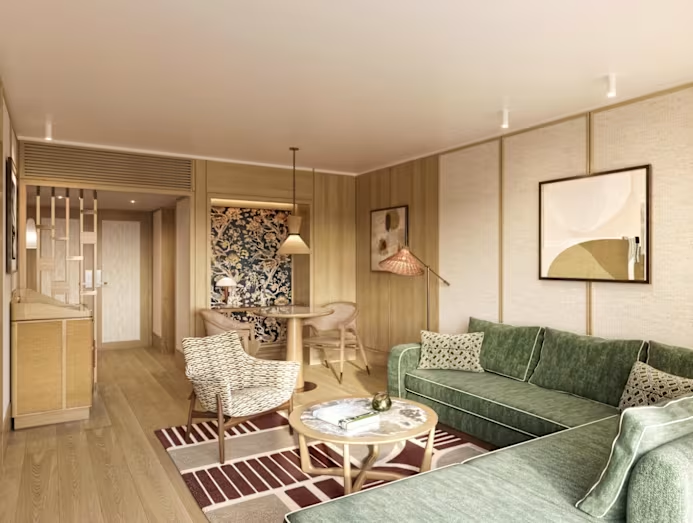
British interior designer Tara Bernerd, who also designed The Hari London and The Hari Hong Kong, is overseeing the interiors. The aim is not to reproduce either sister property but to retain The Hari’s residential, art-led character while creating something unmistakably Singaporean.
There has also been an important strategic development since the hotel was first announced. In August 2026, IHG and the Harilela Group confirmed that all three Hari hotels would join Vignette Collection, IHG’s luxury collection brand. The partnership gives the independently spirited Hari brand access to IHG’s enormous global distribution and loyalty network while theoretically allowing each property to retain its individual identity.
That balance between individuality and scale is one of the more interesting challenges facing luxury hospitality today.

Luxury Without a Script
During the Where2FromHere conversation, Kraemer repeatedly returns to the importance of what might be described as unscripted luxury.
True luxury service, particularly at the highest level, cannot simply be reduced to a checklist of standards. Staff need the confidence and authority to read the person standing in front of them and respond accordingly.
That is particularly relevant in Singapore, where travellers can choose from some of the most highly structured luxury hotel experiences in Asia.
For The Hari to stand apart, Kraemer believes its people will matter as much as its physical product.
This means empowering staff rather than forcing every interaction through rigid service scripts, encouraging individuality and creating a workplace where employees feel sufficiently connected to the hotel to stay and develop within it.
For luxury travellers, the result can be significant. Some of the hotel experiences we remember most vividly are rarely the perfectly executed technical ones. They are the spontaneous gestures, conversations and moments of recognition that make a guest feel someone has genuinely noticed them.
Wellness Is Changing — And Hotels Need to Keep Up
Wellness is another major theme of the conversation, and one on which Kraemer has strong views.
Hotel wellness has changed dramatically since his earlier years working with brands including Six Senses. What was once largely associated with spas, massages and perhaps yoga has expanded into sleep, nutrition, recovery, fitness, mental wellbeing, longevity and increasingly sophisticated technology.
The modern luxury guest may arrive with a far greater understanding of wellness than many hotels realise.
Renae and Kraemer discuss the challenge of balancing that demand with another fundamental truth about luxury travel: people still want pleasure.
They may train in the morning and order Champagne that evening. They may want alcohol-free cocktails one day and a beautiful bottle of wine the next. A sophisticated luxury hotel needs to accommodate both without turning wellness into either deprivation or judgement.
It is an increasingly relevant conversation as hotels race to add wellness credentials to their marketing.
Women Over 40 Remain an Underserved Luxury Market
One particularly interesting part of the podcast concerns the way hotels approach wellness for women over 40.
This is an affluent and influential travel market, yet hotel wellness is still often marketed as though every guest has essentially the same physical and nutritional needs.
Women navigating perimenopause and menopause may be thinking differently about strength training, sleep, recovery, protein, hormones, temperature regulation and stress, while still expecting the same sophistication and indulgence from a luxury hotel stay.
The opportunity for hotels is not necessarily to build separate facilities for these guests. It is to understand them better.
Personalised fitness, thoughtful food choices, excellent sleep environments and intelligently designed wellness programs could become increasingly powerful differentiators as luxury hospitality becomes more personalised.

A Hotel Should Connect You to Singapore
The Hari Singapore’s location gives it an interesting starting point.
It sits moments from Orchard Road, Singapore’s best-known shopping district, but also close to Emerald Hill, with its colourful historic shophouses and Peranakan heritage.
The contrast between those two worlds — international luxury and local history — is precisely the type of tension a modern lifestyle hotel can use to create character.
Kraemer talks about taking guests outside the building rather than trying to keep them permanently inside it.
Shopping, local food, neighbourhood discoveries and cultural experiences can all become part of the hotel experience. In this model, the concierge is not simply booking tables and cars but helping visitors understand something about the city they could not discover by following the same predictable tourist itinerary.
It is particularly relevant in Singapore, a destination some repeat visitors mistakenly believe they already know.
The most interesting Singapore today often sits away from Marina Bay’s obvious landmarks: in neighbourhood restaurants, bars, heritage precincts, emerging creative businesses and local food traditions.
The Hari appears determined to tap into that deeper layer.

Food Still Matters Enormously
For Kraemer, food is not merely another hotel department.
His career has reinforced the importance of restaurants in determining whether a hotel becomes part of its neighbourhood or remains somewhere used primarily by overnight guests.
The most successful contemporary hotel restaurants increasingly need to attract locals as enthusiastically as travellers. That means creating restaurants people would choose even if there were no guestrooms upstairs.
It also explains why the food and beverage conversation in the podcast moves easily between wellness, indulgence, alcohol-free drinks and some of Kraemer’s more memorable hospitality ideas.
One story involves the Champagne drive-through at InterContinental Singapore, an example of the kind of playful thinking that can give a large luxury hotel personality.
That sense of fun matters.
Luxury has spent decades being associated with formality. Increasingly, however, travellers want something warmer: exceptional quality without stiffness, strong design without intimidation and service with enough confidence to occasionally make them smile.

Family Ownership Creates a Different Kind of Hotel
Another important distinction is The Hari’s ownership. The Harilela Group remains family-owned, and the brand carries the name and legacy of Dr Hari Harilela. The family has hospitality interests stretching across Asia and Europe, while The Hari itself has deliberately remained small.
For Kraemer, that family connection influences the way decisions are made and how the hotel’s personality develops.Independent and family-owned luxury hotels can often move differently from giant global brands. There may be fewer layers between an idea and its execution, while an owner’s personal taste, history and values can be felt more strongly throughout a property.
The trade-off is that smaller brands do not possess the vast distribution infrastructure of the biggest hotel groups, which makes The Hari’s new relationship with IHG’s Vignette Collection particularly interesting.
If executed well, it could offer the best of both worlds: the personality of a small family-owned hotel company combined with the commercial reach of one of the largest hospitality groups in the world.
Singapore Doesn’t Need Another Generic Luxury Hotel
The Hari Singapore will enter a ferociously competitive market. Singapore already contains exceptional hotels at almost every interpretation of luxury, from heritage grand dames and global five-star brands to intimate boutiques and the new generation of lifestyle-led properties.
Another expensive lobby, beautiful swimming pool and technically perfect bedroom will not be enough on their own. Kraemer seems acutely aware of that.
His vision is instead centred on character, culture, art, neighbourhood, people and an emotional sense of belonging. The goal is to create somewhere Singaporeans themselves want to visit, rather than a hotel existing solely for travellers. That distinction could ultimately determine whether The Hari succeeds. The most interesting new luxury hotels are no longer trying to remove guests from their destination. They are trying to become one of the reasons guests understand it better. For Andreas Kraemer, that is where The Hari Singapore’s story begins.
Watch the full conversation with Andreas Kraemer and Renae Leith-Manos on Where2FromHere here, where they discuss wellness, food, leadership, women over 40, staff culture, Singapore and what modern luxury really means as The Hari prepares for its 2027 opening.

