
After months of speculation surrounding where season four of HBO’s culture-defining luxury drama would unfold, the Mandarin Oriental Lutetia Paris has now been named as one of the filming locations — a move that instantly places one of the French capital’s most historic hotels at the centre of the global luxury conversation.
And honestly, from my experience in Paris and at Mandarin Oriental, no hotel could suit the series better.
Why the Lutetia Is Perfect for The White Lotus
Because unlike many luxury hotels that simply look expensive, the Lutetia carries something far more interesting and filmable, it has history, personality and the kind of layered glamour that cannot be manufactured. Due to the history and unique French design, it feels cinematic before a camera even enters the room.
Located in Saint-Germain-des-Prés on Paris’ Left Bank — long associated with intellectuals, artists and old Parisian glamour — the hotel has always occupied a different position within the city’s luxury landscape. While many of Paris’ palace hotels lean heavily into formality and polished perfection, the Lutetia has always felt slightly more intriguing. More cultural. More seductive.

Now, thanks to The White Lotus, it is about to become globally iconic all over again.
From Parisian Institution to Global Screen Icon
The decision also marks a notable shift for the HBO series itself. Previous seasons largely centred around sprawling resort properties in destinations like Hawaii, Sicily and Thailand. Paris introduces an entirely different energy — urban, layered, fashionable and emotionally charged. And the Lutetia is not just any hotel.
Originally opened in 1910 by the Boucicaut family — the founders of the legendary Le Bon Marché department store opposite — the property was designed in the Art Nouveau style by architects Louis-Charles Boileau and Henri Tauzin. More than a century later, it remains the only true luxury palace hotel on Paris’ Left Bank, a distinction that has helped preserve its unique identity. That identity is fascinating because the hotel sits between worlds. (For more insider Paris tips click here).

It has the grandeur expected of Parisian luxury, but also a creative, intellectual energy that reflects Saint-Germain’s literary and artistic history. Over the decades, guests have included Pablo Picasso, Josephine Baker, James Joyce, Charles de Gaulle and Peggy Guggenheim. Hemingway drank nearby. Fashion editors still linger in the bar. It is the sort of hotel where conversations feel important, even when they probably are not.
Which, of course, makes it ideal for The White Lotus series 4. The series has always thrived on tension between wealth, image and emotional dysfunction — and few cities perform those contradictions quite like Paris.
Inside the Lutetia’s Cinematic Rooms and Suites
Inside the Lutetia, that drama will have extraordinary backdrops. The hotel has 184 rooms and suites layered with Art Nouveau and Art Deco influences, following a meticulous multi-million-dollar restoration that saw the property reborn for a new generation of luxury travellers.
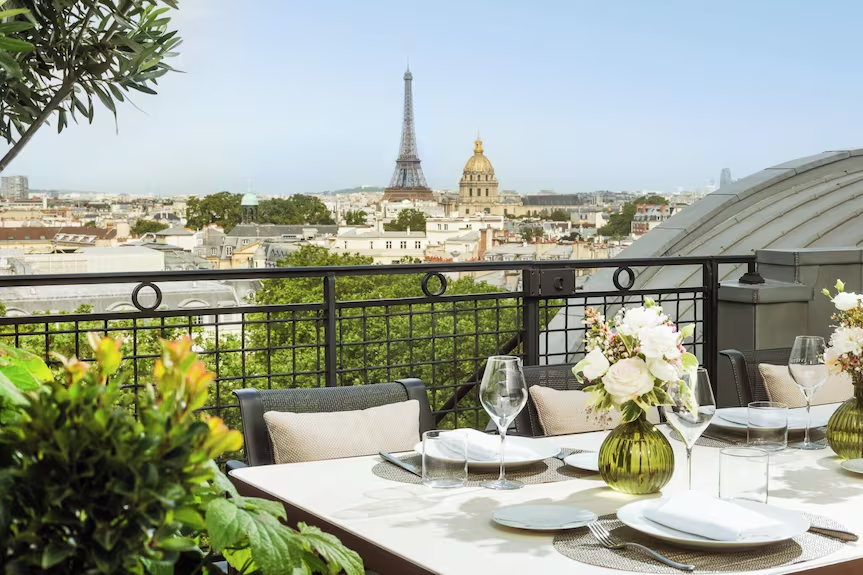
The suites themselves feel distinctly Parisian rather than overtly international luxury. Think curved lines, marble bathrooms, muted palettes, intricate detailing and terraces overlooking the rooftops of Saint-Germain. Several penthouses feature sweeping panoramic views across Paris, including direct Eiffel Tower perspectives that almost feel designed for HBO cinematography.
Bar Joséphine: A Star in Its Own Right
Then there is Bar Joséphine — almost certainly destined to become one of the season’s most recognisable spaces.
Named after Josephine Baker, one of the hotel’s most famous former guests, the bar combines old-world glamour with contemporary Parisian energy. Its frescoes and historic detailing remain protected under French heritage laws, alongside multiple areas of the hotel officially classified as historic monuments.

The Luxury of Authenticity
This heritage element is precisely what separates the Lutetia from many modern luxury openings globally.
In an era where luxury hotels increasingly blur together aesthetically — neutral palettes, curated minimalism, wellness-focused design — the Lutetia feels unapologetically specific. It could only exist in Paris. More importantly, it could only exist on the Left Bank.
That sense of place matters because The White Lotus has evolved into far more than a television series. It is now arguably one of the most powerful luxury travel marketing platforms in the world.
The White Lotus Effect
Previous seasons transformed hotels into global bucket-list destinations almost overnight. Travellers no longer simply watch the series — they actively want to inhabit it. Suites, pools, bars and beaches become part of the fantasy, fuelling demand from affluent travellers seeking the same atmosphere and exclusivity they see on screen. The same effect now appears inevitable for Paris.
But unlike Thailand or Sicily, Paris introduces a different layer to the series. This is not isolated resort luxury. This is urban luxury — social, fashionable and culturally loaded. And that shift may dramatically alter the energy of the show itself.

Paris, Cannes and the New European Luxury Fantasy
There are also suggestions that season four will partly orbit the world of the Cannes Film Festival, adding another layer of celebrity culture, status anxiety and elite European glamour into the storyline.
If true, the Lutetia becomes even more significant. Because unlike many grand Parisian hotels built around tourists, the Lutetia has always been deeply tied to Parisian social life itself. Fashion figures, writers, gallery owners and editors move through the property naturally. It feels lived-in rather than performative. Even its location contributes to that atmosphere.
Why Saint-Germain-des-Prés Is Having a Luxury Moment
Situated near Le Bon Marché, the Seine and the intellectual heart of Saint-Germain-des-Prés, the hotel sits within one of the most desirable pockets of Paris — an area increasingly favoured by affluent travellers seeking a more discreet and culturally rich alternative to the Right Bank’s traditional luxury circuit. And perhaps that is the most interesting part of all.
The Future of Luxury in Paris
The selection of the Mandarin Oriental Lutetia Paris reflects where luxury itself is moving. Travellers are no longer satisfied with generic opulence. They want narrative. Atmosphere. Character. A sense that a hotel means something beyond its thread count and room rate. The Lutetia delivers exactly that.
It carries over a century of history, survived war, hosted artists and intellectuals, reinvented itself multiple times and still remains relevant in modern luxury culture — which is extraordinarily difficult for historic hotels to achieve.
Now, with The White Lotus about to introduce it to millions more viewers globally, the hotel is entering an entirely new chapter. And if previous seasons are any indication, getting a room there may soon become one of the hardest reservations in Paris.


